
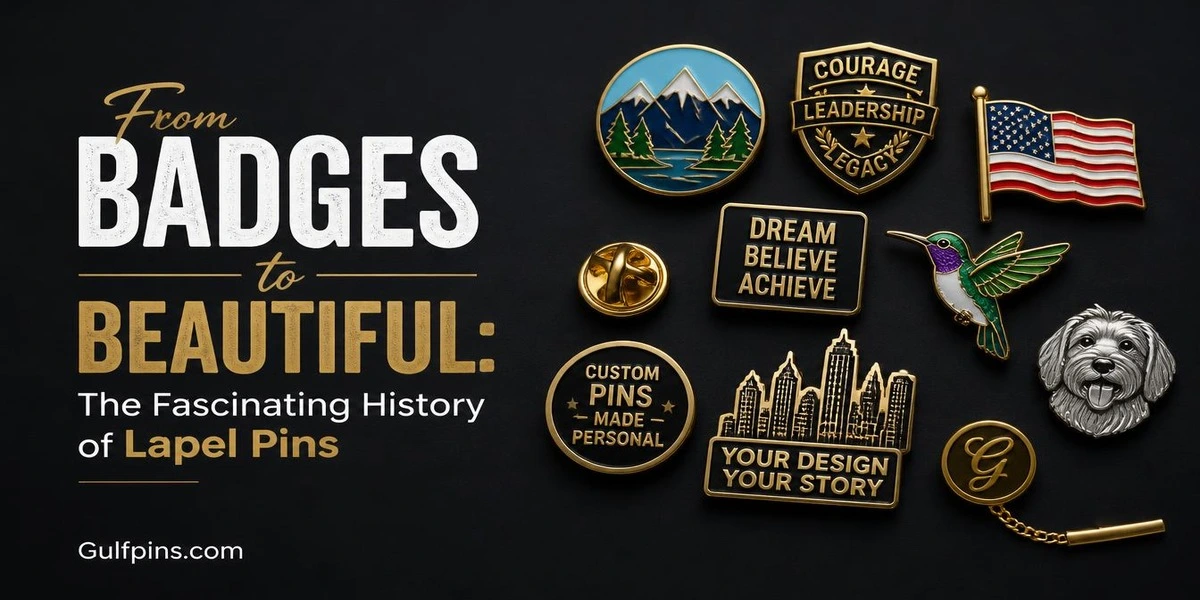
From Badges to Beautiful: The Fascinating History of Lapel Pins
A small pin on a jacket may look like a simple accessory, but its story has stretched across centuries of human history. Lapel pins carry some meaning beyond their size from ancient symbols of loyalty and social status to military decorations, political badges and modern fashion statements. These emblems can help people to express their beliefs, remember special moments, celebrate achievements and show belonging without saying a word.
How did this tiny accessory become such a recognisable part of personal style and professional identity? When you understand its evolution, it reveals how fashion, culture, craftsmanship and communication have shaped the way people wear symbols today. This blog will tell you everything about the history of lapel badges.
Where Did Lapel Pins Originate?
The earliest ancestors of lapel pins were practical clothing fasteners that can gradually became decorative objects. The modern lapel pin developed much later. The desire to attach meaningful symbols to clothing has existed for centuries.
Personalised pins in Oman and brooches helped secure cloaks, robes and other garments in ancient societies. Their usefulness made them essential, but skilled craftspeople can also turn them into attractive accessories using bronze, silver, gold and decorative stones. Celtic hand-pins from the sixth and seventh centuries, which are preserved by institutions such as the Walters Art Museum, demonstrate how functional objects could also display artistic skill.
Enamel work introduced new possibilities for colourful and detailed metal ornaments. Chinese artisans have developed sophisticated decorative techniques that include inlaying and enamel decoration, long before modern manufacturing. Some accounts are associated with early pin like ornaments with the Yuan dynasty (1271 to 1368), but the precise origin of the modern lapel pin remains uncertain. These developments have helped to establish a tradition of combining durable metal work with decorative imagery.
● From Practical Objects To Personal Expression
Clothing styles have changed, and decorative fasteners increasingly communicated identity as well as serving a practical purpose. A carefully crafted brooch could suggest wealth, social position or membership in a particular community. This gradual shift is important because it established the basic idea behind modern pins that is a small object can communicate something significant about its wearer.
How Did Lapel Pins Become Popular?
The modern lapel pin has gained recognition through military honours, political campaigns and the growth of mass production. Each development has introduced new audiences and given fresh purposes to these accessories.
1. Military Honours And Recognition
Military decorations have helped to establish the pin as a symbol of achievement and service. European honours traditions, that include Légion d’honneur of France, has influenced the practice of wearing miniature insignia or rosettes on civilian clothing when full decorations were inappropriate. Canada later has incorporated lapel badges into its honours system, which help to make official recognition visible outside formal ceremonies.
2. Political Campaigns In The Nineteenth Century
Politics gave small wearable symbols a new public role. During the nineteenth century, campaign supporters used buttons, badges and photographic pins to demonstrate allegiance to candidates. The University of Delaware’s political ephemera exhibition documents photographic campaign pins that were associated with Abraham Lincoln’s presidential elections in 1860 and 1864. These objects have turned clothing into a simple and visible form of political communication.
3. The Rise Of Mass Production
Manufacturing advances made campaign accessories cheaper and easier to distribute. Mass-produced pin-back buttons had become an important campaign tool by the 1896 US presidential election. Historical collections at the Senator John Heinz History Centre preserve examples from that period, showing how portraits, slogans and printed designs helped transform political promotion.
4. Corporate And Organisational Identity
Pins became useful beyond politics and the military during the twentieth century. Businesses, schools, clubs and professional associations have adopted badges to identify members, recognise milestones and create a shared visual identity. For example, a pin that features a company emblem can differentiate staff at a conference and remind employees of their connection to the organisation.
How Have Lapel Pins Evolved In Modern Times?
Lapel pins now appear in workplaces, charity campaigns, fashion collections and special events. Their materials and production methods have changed, but their central purpose remains familiar that is to make a message visible.
Designers have incorporated pins into jackets, bags, hats and other accessories, that turn them into flexible styling pieces. Minimal metal designs suit formal outfits, and colourful enamel illustrations appeal to people who prefer playful fashion. You can move pins between garments, that allow wearers to change their look without replacing an entire outfit.
Collecting has become another reason that people value these objects. Vintage political badges, travel souvenirs, military insignia and limited-edition designs preserve connections to particular events and periods. Collectors often examine a pin’s manufacturer, condition, age and provenance before assessing its significance. An ordinary looking badge may become especially meaningful when its original owner or historical context is known.
● The Growth Of Personalised Designs
Modern manufacturing allows individuals and organisations to create designs around specific interests, achievements and occasions. The history of custom pins reflects this broader movement towards personal expression, from traditional symbols of belonging to distinctive designs made for conferences, fundraisers, anniversaries and gifts. Digital artwork and improved production techniques have made intricate shapes, lettering and colour combinations more accessible.
What Are The Steps To Creating A Meaningful Lapel Pin?
When it comes to creating a pin, it involves more than choosing an attractive picture. The strongest designs connect a clear purpose with suitable materials, practical construction and a finish that works for the intended audience.
You should decide what the pin should communicate. A business may want to recognise employees, a charity might promote awareness and a family could commemorate a milestone. A clear purpose can help you to determine the imagery, quantity, wording and overall style before production begins.
2. Choose The Design And Materials
It is the time to select a simple, recognisable symbol and a colour palette that suits the message. Metal finishes such as silver, gold or black nickel can create different visual effects, and enamel adds colour. It is important to check artwork dimensions and letter legibility early to prevent disappointing results for organisations ordering pins.
3. Select The Attachment And Finish
Backing like butterfly clutches, magnetic fasteners and locking clasps each suit different needs. Lightweight designs may work well on suit lapels, and heavier pieces need secure attachments. You should consider durability, comfort and fabric type, especially if you wear the pin regularly.
You should inspect a sample or digital proof for colour accuracy, sharp edges, spelling and alignment. Must ask how the manufacturer is handling scratches, plating and quality checks. This review is particularly useful for bulk orders, where a small design error could affect every finished piece.
5. Distribute And Preserve The Pins
You should present the finished pins in packaging that can protect their surfaces and support the occasion. Collectors should store the valuable examples of the pins in dry conditions away from direct sunlight and excessive moisture. Thoughtful presentation can help you to preserve both the physical item and the memory associated with it.
6. Match The Design To The Audience
You must think about who will wear the pin and where it will be used. A formal corporate event may call for understated metalwork, and a community celebration can benefit from brighter colours and a more expressive shape. Regional preferences are also important when designing commemorative gifts or event merchandise for a particular audience.
Why Do Lapel Pins Still Matter Today?
The appeal of custom lapel pins lies in their ability to make personal or collective identity visible without demanding much attention. A pin can recognise a professional achievement, commemorate a celebration, support a cause or preserve a memory long after an event has passed. Small details of these pins can make the difference.
Know More About The History Of Lapel Pins
What is the main difference between a lapel pin and a brooch?
A lapel pin is generally a small accessory that is designed for a jacket lapel or similar area of clothing and often represents an organisation, cause or interest. A brooch is typically a decorative jewellery piece, sometimes larger and more elaborate, but the terms can overlap, that depends on the design.
Which type of materials are commonly used to make lapel pins?
Manufacturers commonly use zinc alloy, iron, brass or other metals with enamel, plating or printed finishes for decoration. The best choice depends on the design, budget and expected use. Metal composition and finishing quality can influence the pin’s weight, durability, appearance and resistance to wear.
Can lapel pins be worn with formal business attire?
Yes, a discreet pin can complement a suit, blazer or formal jacket without overpowering the outfit. You should position it on the left lapel when it is appropriate for the garment and occasion and choose a design that suits the setting. Workplace dress codes and event protocols should guide your final choice.
Do collectors value historical lapel pins?
Collectors often give value to some of the historical lapel pins. The value of these pins depends on rarity, historical significance, condition manufacturer and documented ownership. Pins that are connected to notable events or identifiable historical figures may attract particular interest. Collectors should research comparable examples and verify provenance instead of assuming an old pin is automatically valuable.
How should I choose a lapel pin as a gift?
You should start with the recipient’s interests, profession or a memorable shared experience. Must consider a symbol that feels personal instead of generic, then choose a comfortable attachment and durable finish. You can also include personalised pins for regional gifting, as it also helps to consider the occasion, recipient preferences and presentation.
Final Verdict
Lapel pins have travelled a remarkable path, that has evolved from practical clothing fasteners into symbols of achievement, fashion, identity and remembrance. The history of these pins can reflect changing craftsmanship, political communication and personal expression across generations. Modern designs are continuing that tradition and offer new ways to celebrate meaningful moments. These small accessories can carry stories that are worth to preserve, whether worn on a business suit or treasured in a collection.

Rashaa el Ebrahim is a passionate content contributor at GulfPins.com, sharing insights about custom pins, enamel badges, branding solutions, and promotional products. With a focus on helping businesses across the Gulf make informed decisions, Rashaa creates practical guides, design tips, and industry-focused content that helps brands choose the right custom pin solutions to strengthen their identity and connect with their audience.