
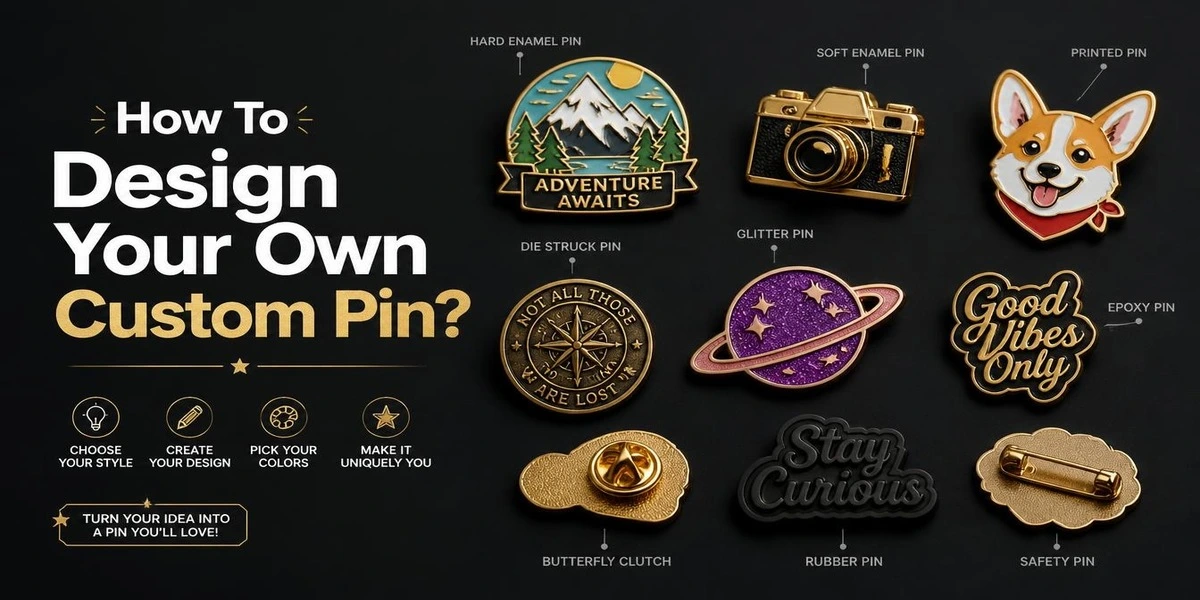
How To Design Your Own Custom Pin?
Designing a custom pin begins with a design concept. Learn how to choose sizing, artwork, material, and personalisation to create an impressive product.
Preparing Your Custom Pin Design For Professional Production
A small pin can carry a big message. It could be the badge of your company, the symbol of your success, the insignia for your cause, or simply the piece that adds character to your outfit. However, the design of such a pin should not only be beautiful but also speak the right language.
A good design includes a lot of factors that should complement one another, including colours, graphics, materials, and some other minor elements.
All of them influence the appearance and the feeling of the ready-made pin in any way, from its overall shape to its graphic representation.
Moreover, the creation of a personalised design will allow you to have better control over the whole process and the outcome. With some effort, anybody can design a special pin that people will love to wear and share with others.
Start With A Clear Idea That Gives The Pin Meaning
Every successful pin starts with a purpose. Even before selecting colours and designing artwork, a designer should know what they want to portray through the pin and who will be wearing it.
A company logo can convey the corporate identity, whereas a personal logo can symbolise a particular passion, pastime, or an achievement. Thinking about the central concept will help avoid including any unnecessary information that can distract from the main message.
It is also important to keep the target audience in mind when coming up with the concept. An employee logo may be designed differently from a collector or event-goer logo. This will make further design work easier.
Choose A Shape That Makes The Artwork More Attractive
The outer form plays a vital role in the aesthetic presentation of a pin. Rather than opting for a circle or square automatically, designers can play around with different forms that complement the artwork and enhance the overall aesthetics.
The custom form can be in line with the central object, symbol, or even the lettering used in the artwork. It creates a link between the form and the meaning behind the pin, thus creating a well-thought-out piece.
It is necessary to maintain the functionality of the pin. Excessively thin borders, sharp corners, and an elaborate form could cause complications during production.
Add Personal Details That Make The Design Special
Personal details could make an ordinary accessory a valuable one. Personal dates, words, images, or symbols could give the design more relevance to the targeted consumers.
All these elements should complement the main piece of art and not act against it. The pin is not supposed to have multiple decorations to feel personalised. Just having one element is enough for the pin to appear unique.
Gulfpins assists companies in converting their creative ideas into custom-made pins that are an embodiment of their brand image and speak to their customers and employees. Whether it’s through their message or custom design, customisation is a great method for creating unique pins.
Select Colours That Make Every Detail Easy To See
The selection of colours can affect the personality of the pin significantly. With bright colours, one can make the pin energetic, whereas using soft colours can provide it with an elegant character and professionalism. It all depends on the message and target audience.
The designers should choose a few colours that are harmonious with each other. Choosing many colours may cause overcrowding in a small design, particularly if the chosen colours are next to each other.
Contrast is yet another thing to consider while working on your pin design. Text and shapes should still be noticeable despite the background. Testing various colour combinations will ensure a balanced look of the pin.
Create Artwork That Looks Clear On A Small Surface
Since pins do not have much space, the artwork requires some consideration. Usually, large shapes, symbols, and illustrations perform better than complex pictures packed with numerous details.
Start with a simple drawing and then proceed to digital art. In this way, it will be easier to modify the layout, remove unnecessary details, and highlight the necessary information.
Moreover, it is crucial that the design looks good after reduction to the real size of a pin. An excellent computer picture may become meaningless because of the loss of detail during manufacturing.
Pick The Right Enamel Finish For A Better Appearance
The type of finish determines how the colour and the raised elements will show in the final product. Two common types include soft enamel and hard enamel. Each of them provides a unique visual appearance.
In soft enamel, the colour is placed into a recessed area surrounded by a raised outline. This creates a textured surface where the outlines are tangible, thus giving more definition to the design.
For the hard enamel pin, there is no raised outline since the surface is even, which means that the enamel has been polished to the same level as the metal edge.
Select Durable Materials For Longer-Lasting Pins
The material utilised in production is essential in determining the strength, weight, and appearance of the pin. Metals such as iron, brass, and zinc alloy have been used widely since they allow for a wide variety of detailed designs.
The choice of material is largely determined by the need for particular design requirements. While some materials may be suitable for basic designs, other materials will suit detailed and custom outline designs.
Selection of the most appropriate material ensures that the pins can keep their appearance even after frequent use. Designers must consult the manufacturer regarding the finishing process of the pins.
Work With The Right Manufacturer To Achieve Your Design
A good concept requires dependable production facilities to be transformed into a product. Producers assist in transforming digital designs into tangible pins through the selection of the right material, making molds, colouring, and finishing.
Designers should take time to familiarise themselves with the work of the producers, the possibilities of customising the product, and the process of production before giving the order.
Custom Pins Bahrain provides companies and people with a great way of expressing themselves through the display of their identity, celebrating important events, and conveying messages to others. With various shapes and finishes, these pins make it simpler to bring any idea to life visually.
Choose A Pin Size That Keeps Every Element Balanced
Size impacts both aesthetics and functionality. A pin which is too small may not give enough space for inscription, whereas an overly big pin may create discomfort wearing it on clothes or accessories.
While creating a pin, it is necessary to think of the place it will be worn and, therefore, about its size. Lapel pins should be relatively small, whereas collectible pins can afford to have some extra space for drawings.
It is equally essential to consider the proportion of the pin’s size and its constituent parts. Good proportions will ensure that the message remains clear without causing the overall design to seem cluttered. Looking at the exact measurements will prevent any surprises.
Select A Backing That Keeps The Pin Secure
The backing is responsible for attaching the pin to clothes, bags, or other items. Selecting an appropriate way of attachment allows you to avoid any unwanted movement and fix your jewelry.
Some of the most popular methods of attachment are butterfly clutches for small accessories or everyday use and rubber clutches for extra comfort, as well as magnetic backs, which allow you to attach the pins without making holes in clothes.
However, for some bigger or heavier pins, extra reinforcement might be required. The fabric used as the backing should complement the type, weight, and use of the pin.
Review The Final Design Before Approving Production
The final review is very important, since even minor errors may influence the whole pin. Designers must ensure that there are no errors in the spelling, the placement of illustrations, the choice of colours, sizes, and the placement of each particular element.
The digital proof helps the customer get acquainted with the design that they plan to order. If there are any changes that need to be made, they must be made during this stage, and not later when the production process starts.
Those individuals seeking out where to get custom enamel pins may find it helpful if the manufacturers offer design previews as well as high-quality materials and customisations to their products. This will help the customer be more comfortable with the design before approving the process.
Everything To Know About Custom Pin Design
How Is a Custom Pin Designed?
Custom pin design begins with the concept, which is followed by the choice of shape, colours, design, size, and finish. Finally, the designed concept is given to the manufacturer to get a proof and an estimate.
What Is the Best Material for Custom Pins?
Iron, brass, and zinc alloy are common materials used to create custom pins. But the right material depends on factors such as design details, longevity, weight, and cost of production.
Which Are Better, Hard Enamel or Soft Enamel Custom Pins?
Each type of finish has its own merits. Hard enamel is known for its glossy finish, while the soft enamel features texture and raised metal lines.
How Long Does It Take to Make Custom Pins?
The time required for manufacturing depends on the complexity of the design, volume of orders, load of the factory, and delivery issues. It is important to agree on that with the manufacturer.
Where to Order Custom Enamel Pins?
Those wondering how to get custom enamel pins can consider pin-making specialists, compare their customisation options, and evaluate past projects. Assessing the quality of samples, prices, and manufacturing processes will help them make up their mind.
Conclusion
Creating an individual pin comes with many decisions to make regarding the initial concept as well as the shape, colours, artwork, material, and finish of the accessory.
The design, balance of layout, correct choice of the backing, and the durability of materials ensure the creation of a functional and good-looking pin. The analysis of the artwork and production proof prevents the risk of any errors in the process.
Through good planning and fabrication, what could be merely an idea becomes something that has considerable significance.
A properly crafted pin can become useful for promoting a company, honouring a memorable event, or serving as a token memento.

Rashaa el Ebrahim is a passionate content contributor at GulfPins.com, sharing insights about custom pins, enamel badges, branding solutions, and promotional products. With a focus on helping businesses across the Gulf make informed decisions, Rashaa creates practical guides, design tips, and industry-focused content that helps brands choose the right custom pin solutions to strengthen their identity and connect with their audience.