
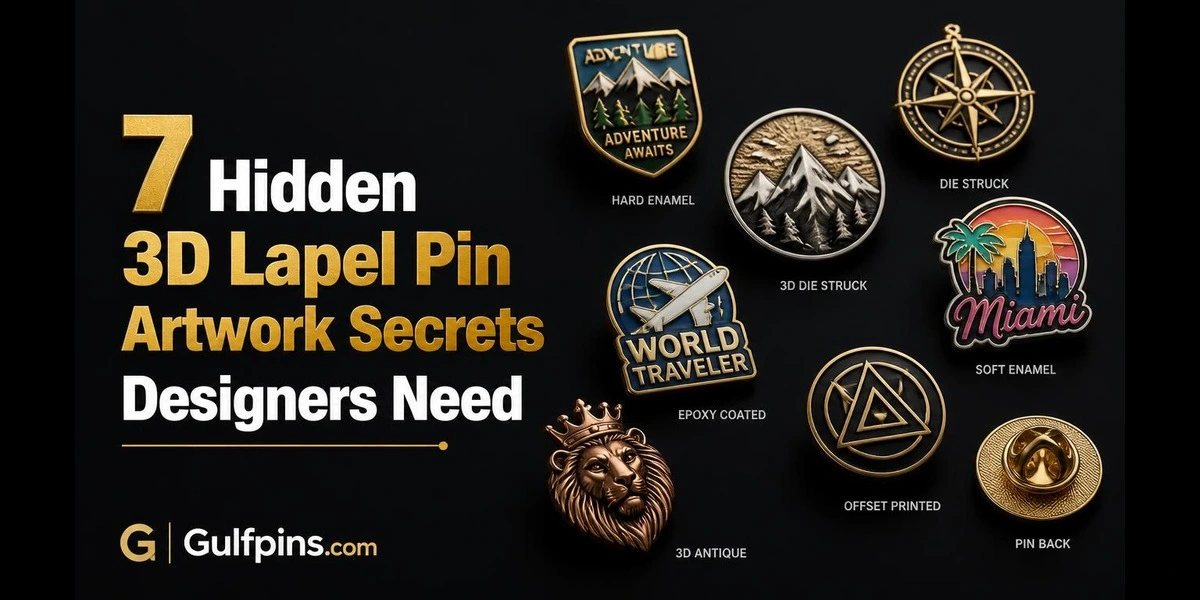
7 Hidden 3D Lapel Pin Artwork Secrets Every Designer Should Know
Designing a successful 3D lapel pin demands a very deep understanding of depth and dimensional layering.
A 3D lapel pin rarely succeeds because of an impressive sketch alone. The artwork may look perfect on a computer screen, but the finished piece can lose its impact once it is transformed into metal.
That happens because pin design follows a different set of rules than digital illustration. Every recessed detail and polished edge must work together within a small physical space. The most successful designers understand this long before production begins.
Here are seven design secrets that experienced pin artists rely on to create stronger three-dimensional results.
How To Upgrade The Design Of Your Lapel Pin?
If you have ever wondered why some lapel pins immediately catch the light while others appear flat despite using the same colors and materials, the answer usually lies in the artwork rather than the manufacturing process.
Here are the top secrets that a designer should know about.
- Think Like a Sculptor Instead of an Illustrator
Many designers begin a pin as though they are creating a logo or poster.
Custom pin makers suggest that this approach often creates problems later.
You will notice that a successful 3D lapel pin behaves more like a miniature sculpture instead of just a printed graphic. This is why you need to consider how different surfaces interact with light once the metal has been stamped or cast.
The raised areas should guide the eye naturally across the design rather than competing for attention.
This is why the strongest pins usually contain one dominant focal point supported by smaller secondary details. When every surface sits at the same height, the finished product often loses depth before it even leaves the mould.
- Don’t Raise Everything
A common mistake is trying to make every important detail stand above the background.
Ironically, this reduces the overall three-dimensional effect as contrast creates depth.
Leaving certain areas recessed allows the higher sections to appear more dramatic. Shadows become part of the artwork rather than something that accidentally appears afterward.
Professional designers often decide what should remain low before deciding what should stand high.
That simple change produces cleaner results without increasing production complexity.
- Light Should Be Part of the Artwork
Many people only think about lighting once photography begins, as experienced pin designers consider it during the earliest sketch.
- Highly polished metal reflects light differently from antique finishes.
- Curved surfaces behave differently from flat planes.
A design that includes gentle transitions between different heights often creates more visual interest than one filled with abrupt edges.
Imagine holding the finished pin under daylight before approving artwork.
Would the important details still stand out?
The artwork may need further refinement if your answer is uncertain.
- Simplify Before Adding Detail
Small artwork often encourages designers to include as much information as possible, but the opposite approach usually works better.
Decorative borders and unnecessary background elements can look attractive on screen, yet become almost invisible once reduced to lapel pin size.
Instead of asking what else can be added, you need to ask what can be removed without affecting the message.
Every remaining detail then receives more space to stand out, and this is why award-winning lapel soft enamel pins in UAE achieve their impact through clarity rather than complexity.
- Edges Deserve More Attention Than Most Designers Give Them
The outline of a lapel pin is often the first thing people notice.
This is why a strong silhouette helps a pin remain recognizable from several feet away.
Experienced designers allow the border to become part of the artwork itself instead of treating it as an afterthought.
Curves, cut-outs and carefully balanced proportions can make even a simple design feel distinctive before anyone notices the finer details.
The best silhouettes remain recognizable even without color.
- Texture Can Create Depth Without Adding Height
Three-dimensional artwork is not created through raised metal alone because the texture also influences how a pin is perceived.
Smooth polished areas naturally attract attention because they reflect more light. By contrast, sandblasted, antique or lightly textured finishes absorb light and quietly move into the background.
Using both finishes within the same design creates visual separation without increasing the number of physical layers.
For example, a polished emblem placed against a lightly textured background often appears more prominent, even when both areas sit at similar heights.
Designers who understand this relationship between finish and perception can achieve a richer look while keeping the artwork clean and balanced.
- Test the Design at Actual Size
One of the easiest ways to spot design issues is also one of the most overlooked ones.
Print the artwork at the exact size of the finished pin.
Details that looked clear on a large computer monitor may suddenly become difficult to recognize. Fine lettering and tiny icons often reveal whether they genuinely contribute to the design or simply create visual clutter.
Viewing artwork at full size also helps identify spacing problems before production begins.
Professional designers rarely rely on zoomed-in artwork alone. They repeatedly return to actual scale because that’s how the finished product will be experienced.
Small Adjustments Often Make the Biggest Difference
The goal isn’t complicated illustrations when someone decides to create custom hard enamel pins.
Instead, they rely on thoughtful decisions made throughout the design process.
- A slightly lower background.
- Using a cleaner outline.
- The focus on better spacing.
- More controlled use of texture.
None of these changes attracts attention individually, yet together they transform an ordinary design into one that feels premium.
That is why experienced pin designers spend so much time refining artwork before manufacturing begins.
The production process can only reproduce what already exists within the design.
Bringing the Design and Manufacturing Process Together
Artwork should never be created in isolation from production.
Every manufacturing method has strengths and limitations. Understanding those characteristics early allows designers to make informed decisions instead of correcting problems after the mould has already been created.
Discussing artwork with the manufacturer before final approval often reveals opportunities to improve depth or enhance durability without changing the overall concept.
This collaboration usually produces a better finished pin while reducing unnecessary revisions.
Common Queries Answered
-
What makes a lapel pin artwork suitable for 3D production?
The design needs clear foreground and background elements, proper height designations and adequate room for key elements that will not disappear during manufacturing.
-
Can any logo be converted into a 3D lapel pin?
Many logos can be used, but sometimes they need to be simplified. Complex fine text, patterns and tight elements need to be worked on to get readable results.
-
Why is a digital proof needed before manufacturing?
A digital proof lets the designers see how the proportions and textures will look before the manufacturing process starts. Small things will be much cheaper to fix at this point.
Wrapping Up
A successful 3D lapel pin design is not usually an outcome of a one-off brilliant idea but more likely the result of numerous subtle choices that make up the whole, such as the way the layers connect, the way the light hits the piece, and which elements of it are emphasized and which are omitted.
Designers who treat lapel pins as tiny sculptures and not just drawings always create better designs. The artwork becomes much more fun to handle and looks simply amazing once it gets transformed into metal.

Rashaa el Ebrahim is a passionate content contributor at GulfPins.com, sharing insights about custom pins, enamel badges, branding solutions, and promotional products. With a focus on helping businesses across the Gulf make informed decisions, Rashaa creates practical guides, design tips, and industry-focused content that helps brands choose the right custom pin solutions to strengthen their identity and connect with their audience.